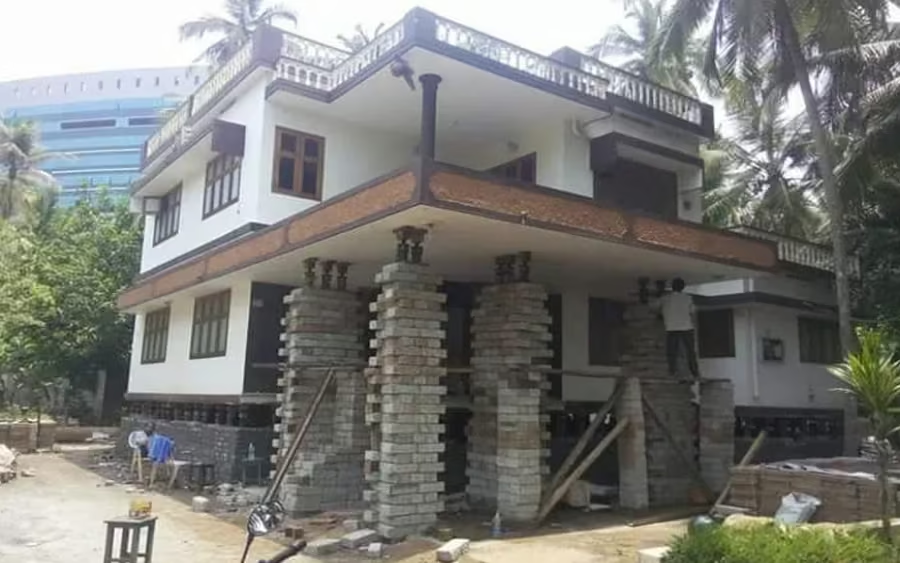
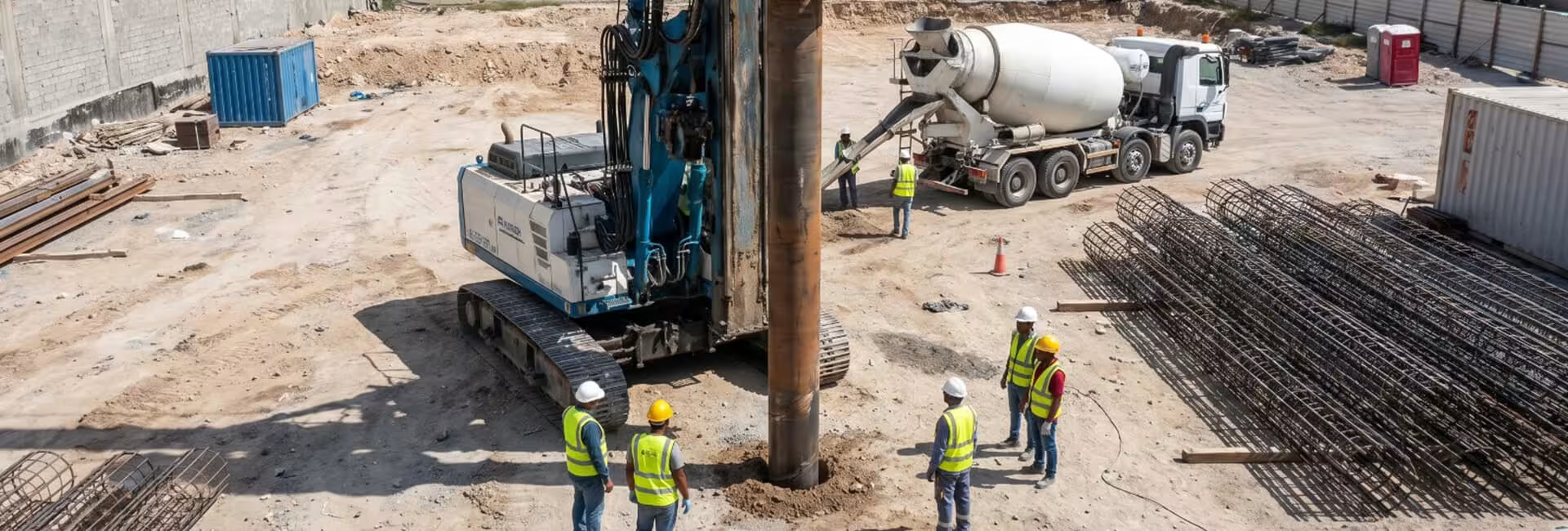
At Idea Builders, we provide professional pile foundation services in Kerala, India for residential, commercial, industrial, and infrastructure projects. Our expert team designs and executes pile foundation systems that ensure superior load-bearing capacity, structural stability, and long-term durability, even in challenging soil conditions.
Using advanced equipment and engineering expertise, we deliver safe, cost-effective, and high-quality foundation solutions tailored to your project requirements. From site assessment and soil analysis to pile installation and quality assurance, every stage is handled with precision to ensure a strong foundation for your construction.
Whether you're constructing a home, apartment, commercial building, or industrial facility, Idea Builders delivers dependable pile foundation services in Kerala with a focus on strength, safety, and long-term performance. Contact us today to discuss your project and build on a solid foundation.
Find answers to common questions about Ideabuilders.
Piles are used when the soil near the surface cannot safely carry the building's load, so the load has to be transferred deeper to firm strata or carried by friction along the pile shaft. The usual triggers are weak or loose soil at foundation level, filled or reclaimed ground, a high water table, soft clay or marshy conditions, and heavy loads from multi-storey, commercial or industrial structures.
In Kerala this comes up often on converted paddy land and low-lying plots where fill has been placed over soft ground, on coastal sandy soils, and on sites where laterite gives way to weaker material at depth. Surface appearance is misleading, because a plot can look perfectly firm in summer and behave very differently once saturated.
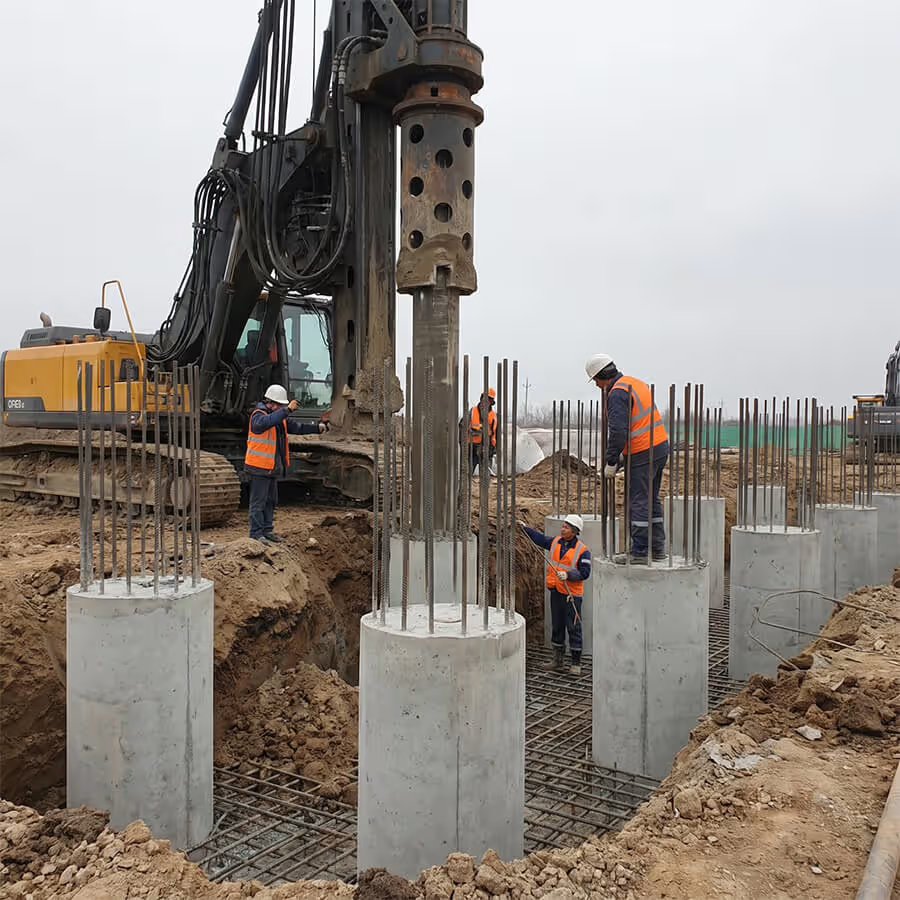
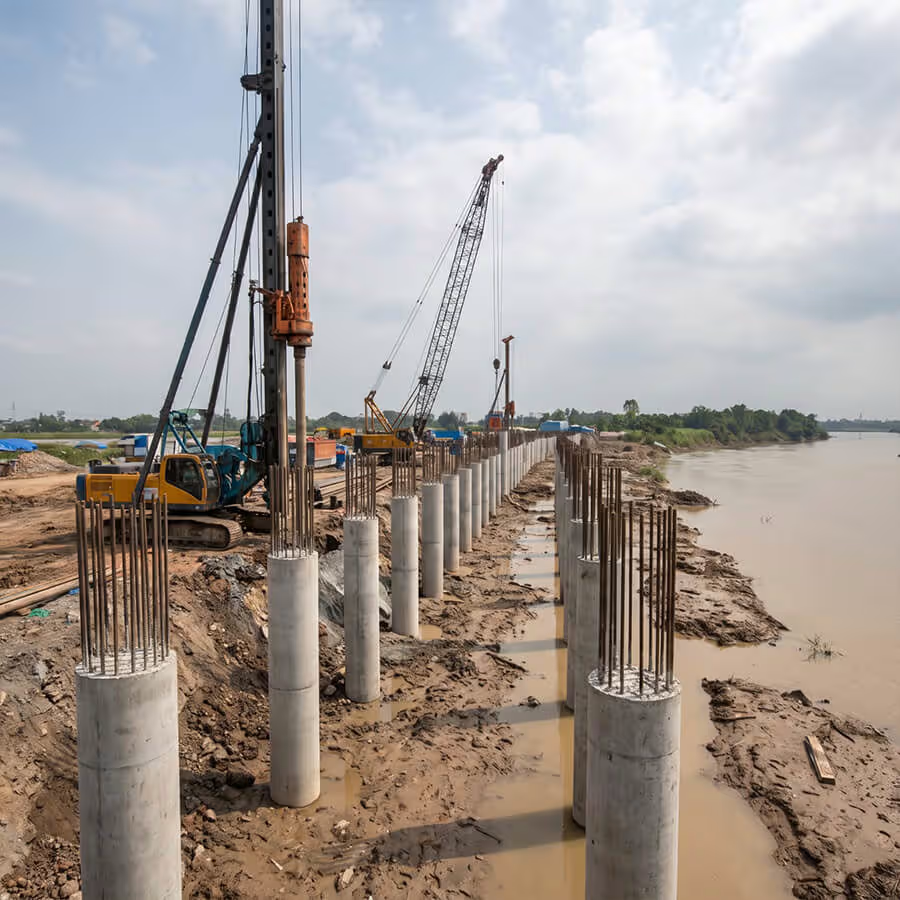
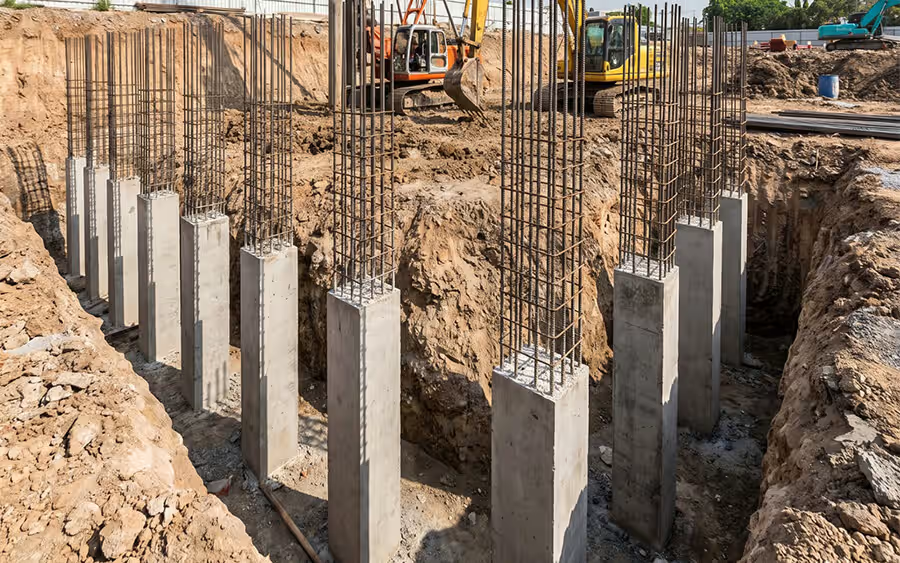
Bored cast-in-situ piles are formed by drilling a hole to the required depth, placing the reinforcement cage, and casting concrete in position. Driven piles are precast or prefabricated and hammered into the ground to the required set. Bored piling generates far less vibration and noise, which makes it the practical choice on tight urban plots with neighbouring buildings close by, and it allows the actual soil strata to be observed during boring.
Driven piles can be quicker where ground conditions suit them and where site surroundings tolerate the vibration and noise. The correct choice follows from the soil investigation, the load to be carried, site access and the proximity of adjacent structures, rather than from a general preference.
Yes, and skipping it is the single most expensive shortcut in foundation work. A subsurface investigation establishes what lies below the site, typically through boreholes with standard penetration testing and sampling, which determines the safe bearing capacity, the depth of firm strata, the groundwater level and the soil's behaviour under load.
Without that data, pile type, diameter, depth and spacing are guesswork. Under-designing risks settlement and cracking that surface years later, while over-designing means paying for capacity the building will never use. The report also protects you during approvals and lending, since project reports and structural designs both rest on it.
This is a legitimate concern on Kerala's typically tight plots, and it is one of the main reasons bored cast-in-situ piling is specified in built-up areas. Boring removes soil rather than displacing it by impact, so ground vibration is substantially lower than with driven piling.
Good practice on a constrained site includes surveying and photographically recording the condition of adjoining structures before work starts, planning pile positions and sequence with the boundary in mind, controlling spoil and slurry, and monitoring during execution. Where neighbouring buildings are old or already showing distress, the method and sequence are adjusted accordingly rather than treating every site the same way.
Verification happens at three stages. During installation, boring depth, verticality, reinforcement placement, concrete quality and the volume of concrete consumed against the theoretical volume are all recorded. After casting, integrity testing can be used to check for defects along the shaft. And pile load testing confirms that the pile carries the design load within acceptable settlement.
Indian practice for the design, construction and testing of piles follows IS 2911, and testing is typically carried out as an initial test to establish capacity and routine tests on working piles as a quality check. Ask for these records, because a foundation is the one element of a building that cannot be inspected after it is buried.
A pile foundation costs more than a conventional footing in isolation, but that is the wrong comparison. On ground that cannot support shallow foundations, the alternatives are extensive soil improvement, a deep raft, or accepting settlement, and the cost of remedying a settled building later exceeds the foundation saving many times over.
Cost is driven by pile diameter, depth and number, soil conditions, groundwater, site access for rigs and concrete delivery, and the pile type selected. Duration depends on the same variables plus the extent of testing. Idea Builders handles site assessment, soil investigation support, foundation design and execution together, so the design assumptions and the work on site stay consistent. Enquiries on +91 9400 602068 or at info@ideabuilders.in.